
Bring to the table win-win survival strategies to ensure proactive domination. At the end of the day, going forward, a new normal that has evolved from generation.
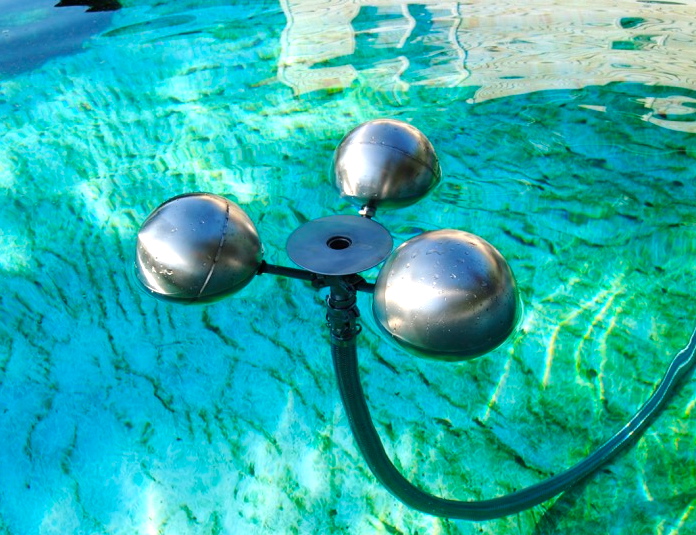
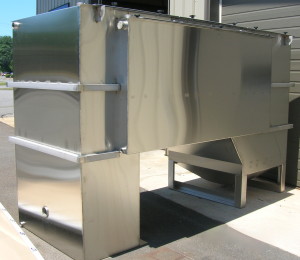
Our triple-float oil skimmers are designed to free float on the water and remove non-emulsified oils from the surface. Constructed of stainless steel, they can be designed to be rigid or hinged to fit into small manhole openings in wastewater storage tanks.
Floating Oil Skimmer
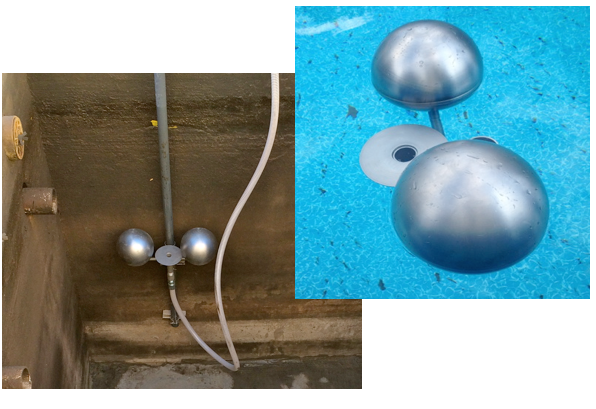
Wall-Mounted Oil Skimmers
Our dual-float, wall-mounted oil skimmers are designed to remove non-emulsified oils from the surface of the water. Skimmers are constructed from stainless steel for corrosion resistance and sturdy enough for any application. The wall-mounted slide pipe allows the skimmer to float vertically but be kept close to the wall so it can be accessed easily. It can be built to accommodate any size sump.
Depending on the application, both skimmers can be custom-built for size and flow rate.
Our dual-float, wall-mounted oil skimmers are designed to remove non-emulsified oils from the surface of the water.
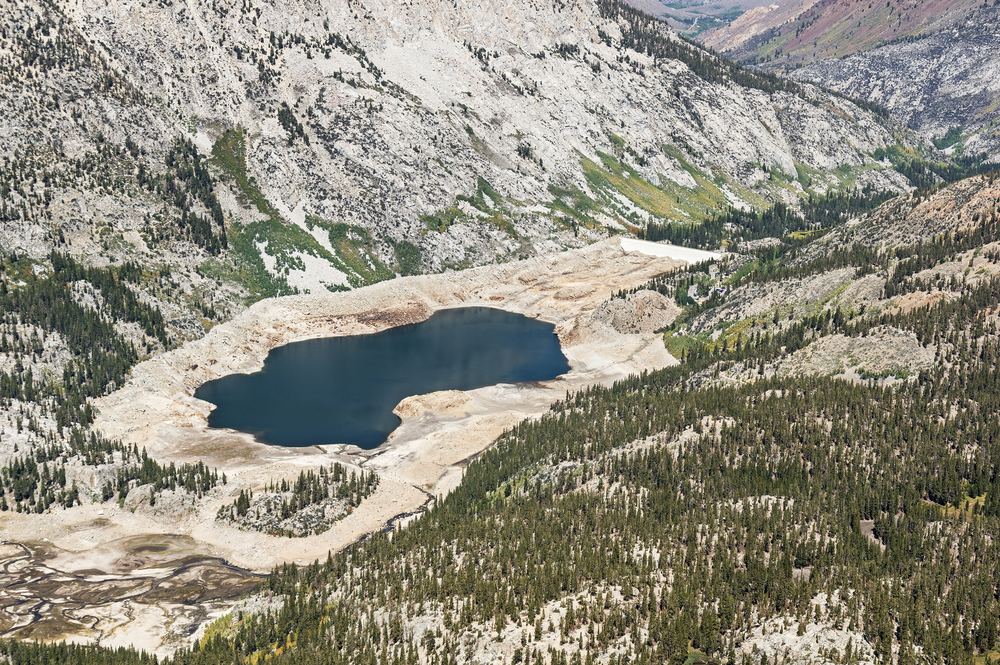
Aerial view showing low water level in South Lake reservoir in California because of drought.
California is now entering its fourth year of drought. State and local authorities have asked residents to voluntarily reduce water use by 20%. Various water managers estimate that available water will last for a year or at the most three.
While at present the authorities have asked for a voluntary reduction in water use, this is likely to be followed soon by price rationing where households that consume more than 150 gallons of water a day will be charged a higher rate. Apart from residents, industries and businesses too have to work to reduce water usage to help overcome the drought and reduce their water bills or keep them under manageable levels.
Recycling Waste Water
One of the most effective ways of reducing water consumption is by recycling waste water. This helps reduce effluent discharge and ensures that the same water is reused. Many industries such as trucking, fork lift operators, rail operators, car wash units, and others use water for washing the vehicles. This is part of maintenance and ensures a professional image, happy and health drivers, and clean transportation facilities. However, the amount of water used can be high. By recycling the waste water, the businesses can reduce their water consumption and their water bills.
CT Series Wash Water Systems
Commercial trucking companies can install the CT Series wash water systems to recycle and reuse the waste water. The system removes settle-able solids and non-emulsified oil droplets before filtering the water to make it reusable. The multi-stage reclaim and discharge process begins with a solid removal process. This system can be designed to be “site specific” – taking into account the specific features of the site.
A stainless steel oil and water separation system is used to remove non emulsified oil drops from the water as well as settle-able solids. Once this is done, the water is passed through a highly efficient water filtration process that uses corona and activated carbon to purify the water. This removes all contaminants that are larger than 10 microns in size including volatile organic compounds, waxes, and oils.
RL Series Treatment Systems
Another efficient method of transportation is by rail. A rail company that wants to reduce its water usage and still keep its carriages clean can do so by installing the RL Series Treatment Systems. These systems have been developed especially for the railways. They can be combined with existing rail wash systems to ensure that the water use is significantly reduced.
First, the wash water is passed through a stainless steel clarifier oil water separator that removes settle-able solids, and separates the oil and water. All suspended solids are removed at this stage as well as free and dispersed non emulsified oil. Next, the water is passed through a solids filtration system that uses blended activated carbon. This process will remove waxes, volatile organic compounds, and all particles greater than 10 microns in size, ensuring water that can be reused for washing the railway carriages.
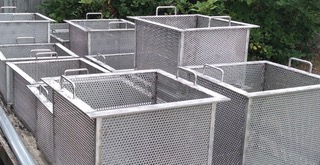
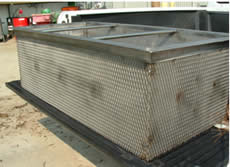
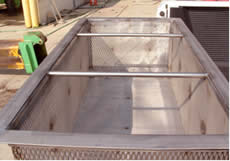
Our Wash Bay Solutions Stainless Debris Baskets are designed to both protect the equipment and help control costs associated with solids removal from wash bay sumps. The baskets are for washing applications with an average amount of solids. The baskets fit snugly into the sump and catch all solids from the wash bay before they reach the recycle systems. When the basket is full, personnel remove it and set it to the side to dewater. A second basket can then be placed into the sump and washing can continue. Once the sediment in the first debris basket is de-watered, it can be easily disposed of according to local enforcement agency regulations.
Applications:
Heavy Equipment Washing
Aircraft Maintenance
Truck & Bus Washing
Forklift Wash Facilities
Military Bases
Benefits:
Low Maintenance
Heavy Duty Construction
Impervious to Non-petroleum Materials
Easy to Install
The baskets are constructed of stainless steel plates and stainless mesh. They come in standard sizes or custom sizes to fit into an existing sump. One or two handles on each basket make them easy to move around.
To reduce both hauling costs and water usage, many oil field services companies have installed our Drilling Equipment (DE Series) Systems to treat and recycle their wastewater.
Oil and gas drilling, including hydraulic fracking, is a complicated endeavor. The nature of the work ensures that dirt, downhole acids, crude residues, waxes, and grease coat down-hole motors, pumps, subs, drill pipe, tanks, and vehicles. Constant washing and NDT testing is essential to maintaining the equipment in good working order. These processes, however, produce an enormous amount of water. Often, the wastewater is stored onsite and disposed of every few weeks – which can get very expensive.
To reduce both hauling costs and water usage, many oil field services companies have installed our Drilling Equipment (DE Series) Systems to treat and recycle their wastewater. Robustly designed and manufactured for the oil and gas industry, our heavy-duty, multi-stage treatment systems clean up the water for re-use or discharge. By simplifying the water handling, many clients are able to both increase production and reduce costs, resulting in pay back periods of only months!
The important first stage is the solids handling system. Depending on the amount of solids and the wash pad design, our engineers will develop a site-specific system to remove as many solids as possible before the water goes to the filtration systems.
The next stage of the system is the stainless steel clarifier oil water separator which removes most suspended solids (TSS), essentially all settleable solids and all free and dispersed non-emulsified oils from the waste stream.
Depending on the application, the next stage could be biological treatment. Our proprietary biological filter system uses a revolutionary, patented US technology, including specifically developed microbes combined with a highly efficient aeration technology, to treat the water and remove substantially all of the COD and FOG in the water.
In the final polishing stage, the water goes through an extremely efficient filtration process utilizing fully automated solids filtration and a proprietary blended activated carbon (GAC) polishing filtration, and a corona discharge ozone generator to prevent odors. Processed water passing through the system will be free of particles greater than 10 microns in size, substantially all emulsified oils, waxes and other volatile organic compounds.
STANDARD DE Series SYSTEM FEATURES:
Stainless Steel Construction
High-Efficiency Pumps
Corona Discharge Ozonation System
Solids Handling & Separation
TSS, COD, FOG Reduction
Multi-Stage / Multi-Pass Filtration
Pressurized Blended Carbon Polishing Filters
Auto-Backwashing Filters
NEMA 4X Control Panel with PLC controller
Depending on the location, many options are available to maximize the efficiency of the wastewater treatment system including:
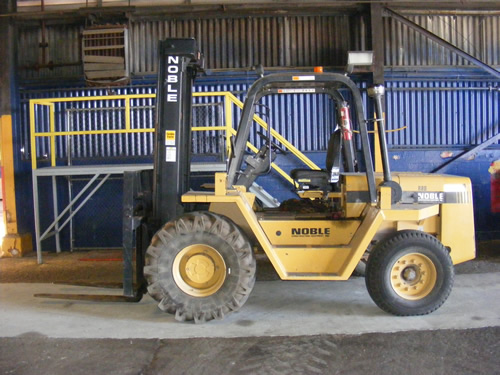
Industrial forklifts are used in a variety of places including construction sites, shipyards, mines and drilling sites. They are invaluable in that they can unload pallets of materials, steel girders and pipes and other products from the delivery trucks and carry them to parts of the work sites that are not accessible to other vehicles. Larger, heavy-duty forklifts can also transport large containers from delivery trucks to dockside storage areas, and then to the ships. Due to the working conditions and locations, forklifts will often get extremely dirty. After washing, the wash water generated will be full of grease and oil.
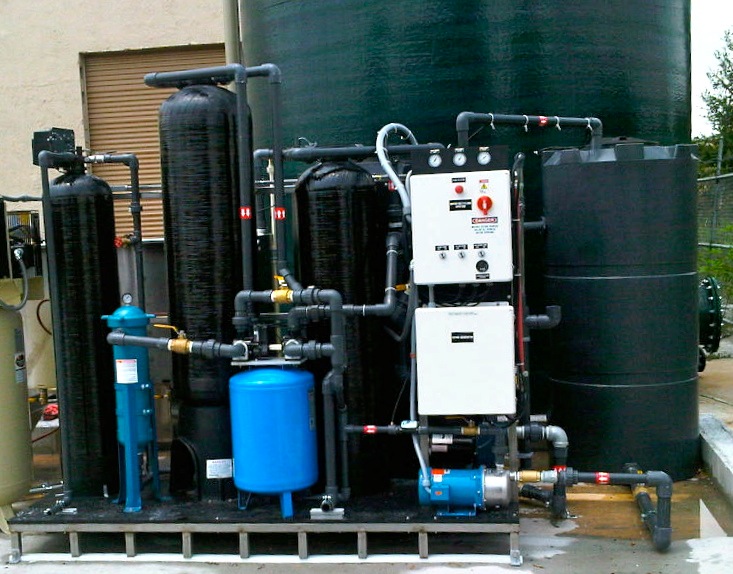
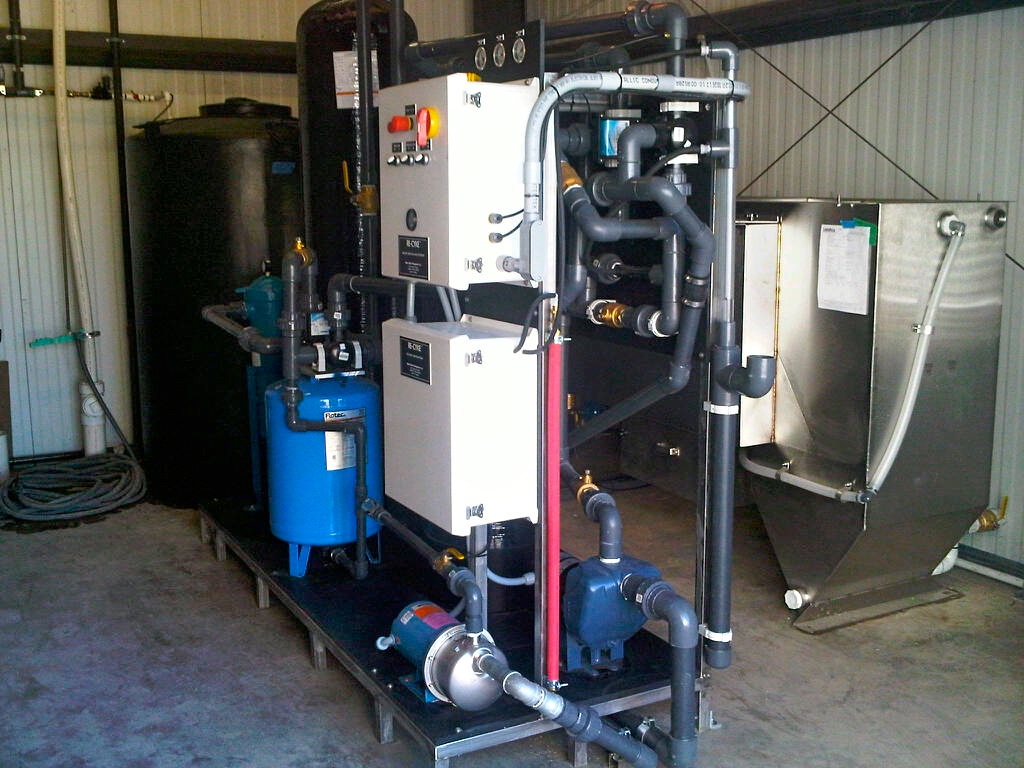
Our Fork Lift (FL Series) Water Treatment Systems are heavy-duty, multi-stage reclaim and discharge systems.
Our Fork Lift (FL Series) Water Treatment Systems are heavy-duty, multi-stage reclaim and discharge systems.Depending on the usage, a certain amount of solids will be generated by the washing process. To handle the solids, our engineers will develop a site-specific solids removal system which could include sumps, trenches, screens, debris baskets and skimmers.
After many of the solids are removed in the first stage, the water will then be processed through a stainless steel clarifier oil water separator which removes most suspended solids (TSS), essentially all settleable solids and all free and dispersed non-emulsified oils from the waste stream.
After the clarifier separator, the water can either be discharged or further processed for re-use. If the water needs to be re-used, the water then goes through an extremely efficient filtration process utilizing fully automated solids filtration and a proprietary blended activated carbon (GAC) polishing filtration, and a corona discharge ozone generator to prevent odors. Processed water passing through the system will be free of particles greater than 10 microns in size, substantially all emulsified oils, waxes and other volatile organic compounds.
FL SERIES STANDARD FEATURES:
Stainless Steel Construction
High-Efficiency Pumps
Corona Discharge Ozonation System
Solids Handling & Separation
TSS & FOG Reduction
Multi-Stage / Multi-Pass Filtration
Pressurized Blended Carbon Polishing Filter
Auto-Backwashing Filters
NEMA 4X Control Panel with PLC controller
Depending on the location, many options are available to maximize the efficiency of the wastewater treatment system including:
OPTIONAL FEATURES:
Can be configured with existing equipment
SCADA and remote monitoring
UL/CSA Listing
Transportable equipment rooms
Rain Diverter Systems – if wash pads are uncovered
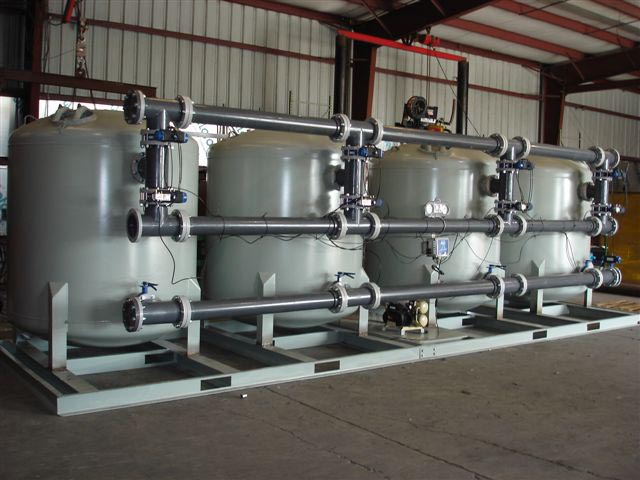
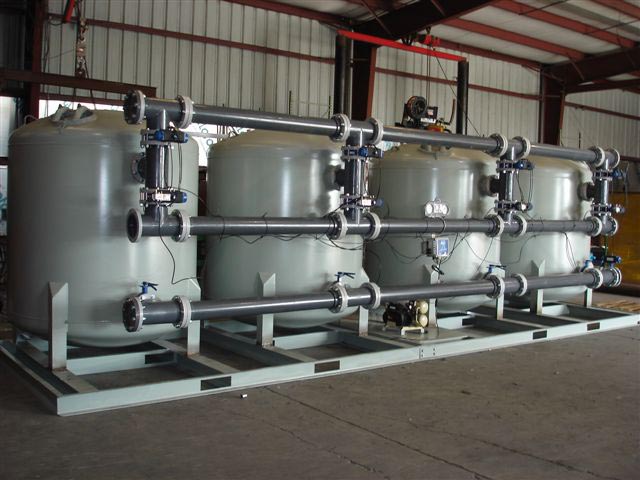
4-Vessel MINING & CONSTRUCTION (MC Series) TREATMENT SYSTEMS
As the demand for minerals and precious metals grows, mining companies are constantly working to keep up with demand and improve their mining methods while at the same time doing as much as they can to preserve the environment. Most mining and heavy construction work is predominantly done by heavy equipment such as LHD loaders, backhoes, excavators and dump trucks. This equipment gets coated with solids, dirt and grime on a daily basis.
Daily washing is an important part of maintaining the equipment in good working order. This washing, however, produces a lot of dirty water and solids. The most efficient way to reduce your water usage and hauling costs is to remove the solids and recycle the water.
Our Mining & Construction Equipment (MC Series) Systems are heavy-duty, multi-stage reclaim and discharge systems, engineered and manufactured for the mining and heavy construction industries.
Because of the enormous amount of solids generated by the washing process, the most critical first stage for these systems is the solids handling system. Depending on the wash pad design, our engineers will develop a site-specific system including sumps, trenches, screens and skimmers to remove as many solids as possible before the water goes to the subsequent filtration systems.
After many of the heavy solids are removed in the first stage, the water will then be processed through a stainless steel clarifier oil water separator which removes most suspended solids (TSS), essentially all settleable solids and all free and dispersed non-emulsified oils from the waste stream.
After the clarifier separator, the water can either be discharged or further processed for re-use. If the water needs to be re-used, the water then goes through an extremely efficient filtration process utilizing fully automated solids filtration and a proprietary blended activated carbon (GAC) polishing filtration, and a corona discharge ozone generator to prevent odors. Processed water passing through the system will be free of particles greater than 10 microns in size, substantially all emulsified oils, waxes and other volatile organic compounds.
MC SERIES STANDARD FEATURES:
Stainless Steel Construction
High-Efficiency Pumps
Corona Discharge Ozonation System
Solids Handling & Separation
TSS & FOG Reduction
Multi-Stage / Multi-Pass Filtration
Pressurized Blended Carbon Polishing Filter
Auto-Backwashing Filters
NEMA 4X Control Panel with PLC controller
Depending on the location, many options are available to maximize the efficiency of the wastewater treatment system including:
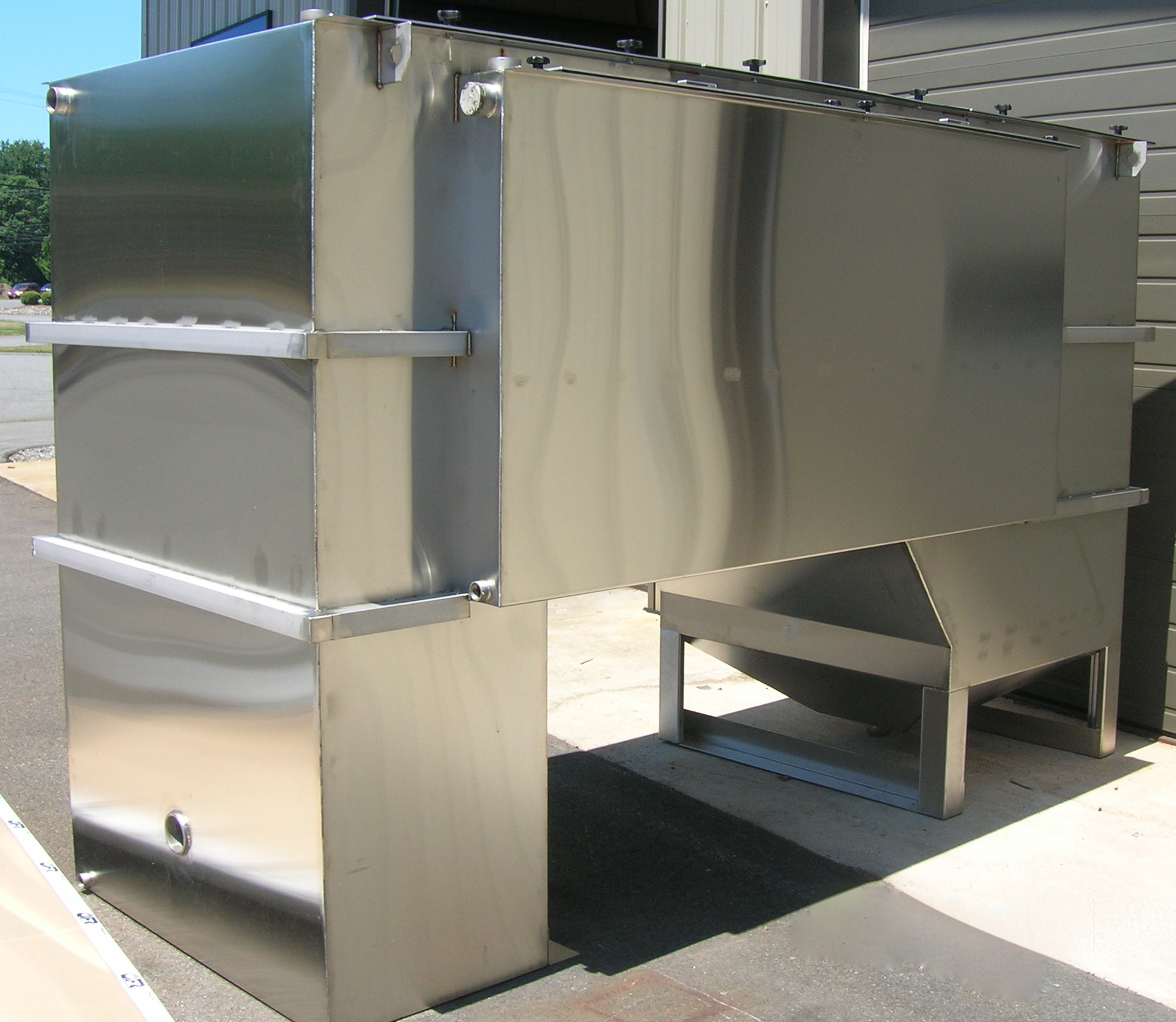
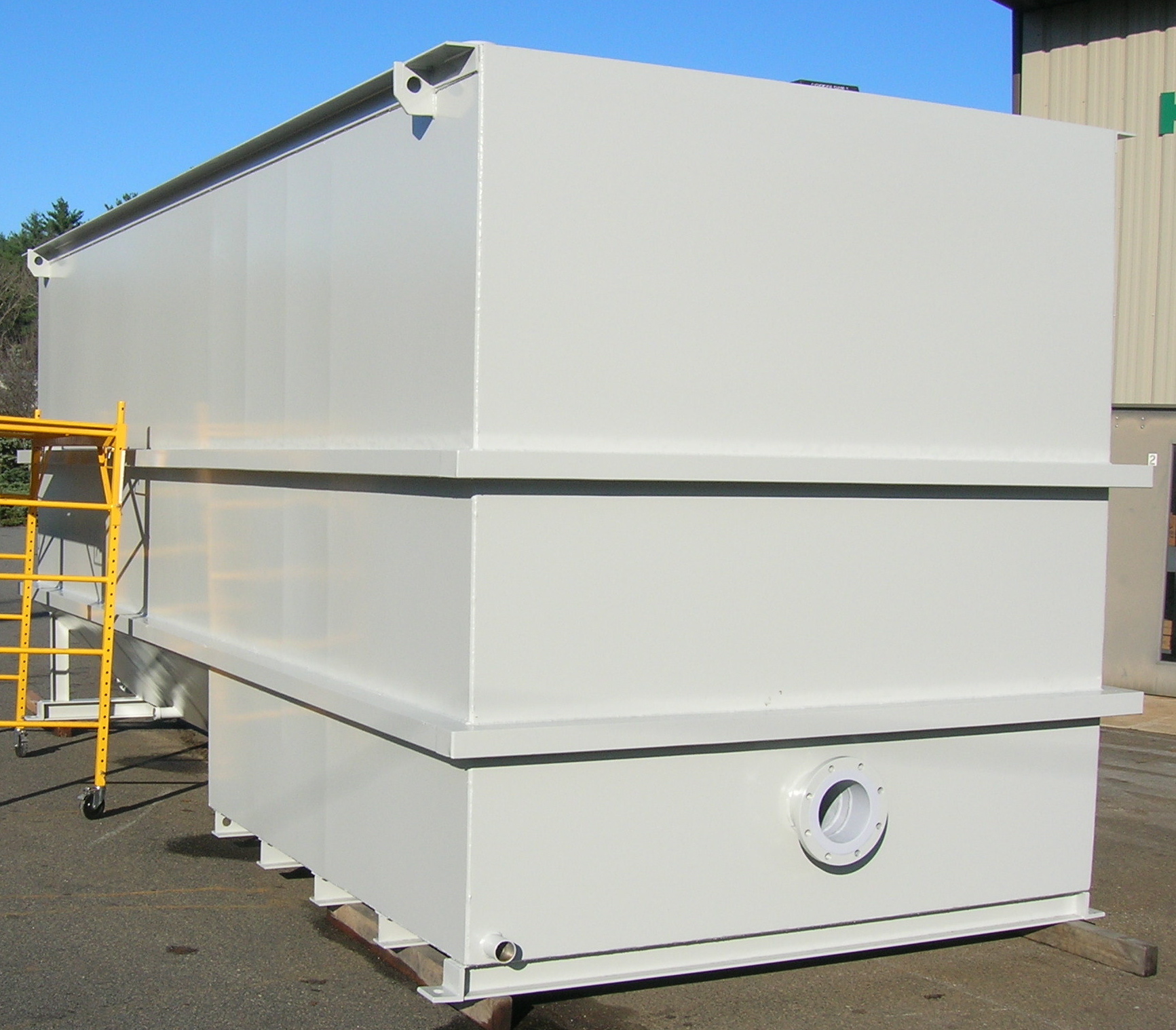
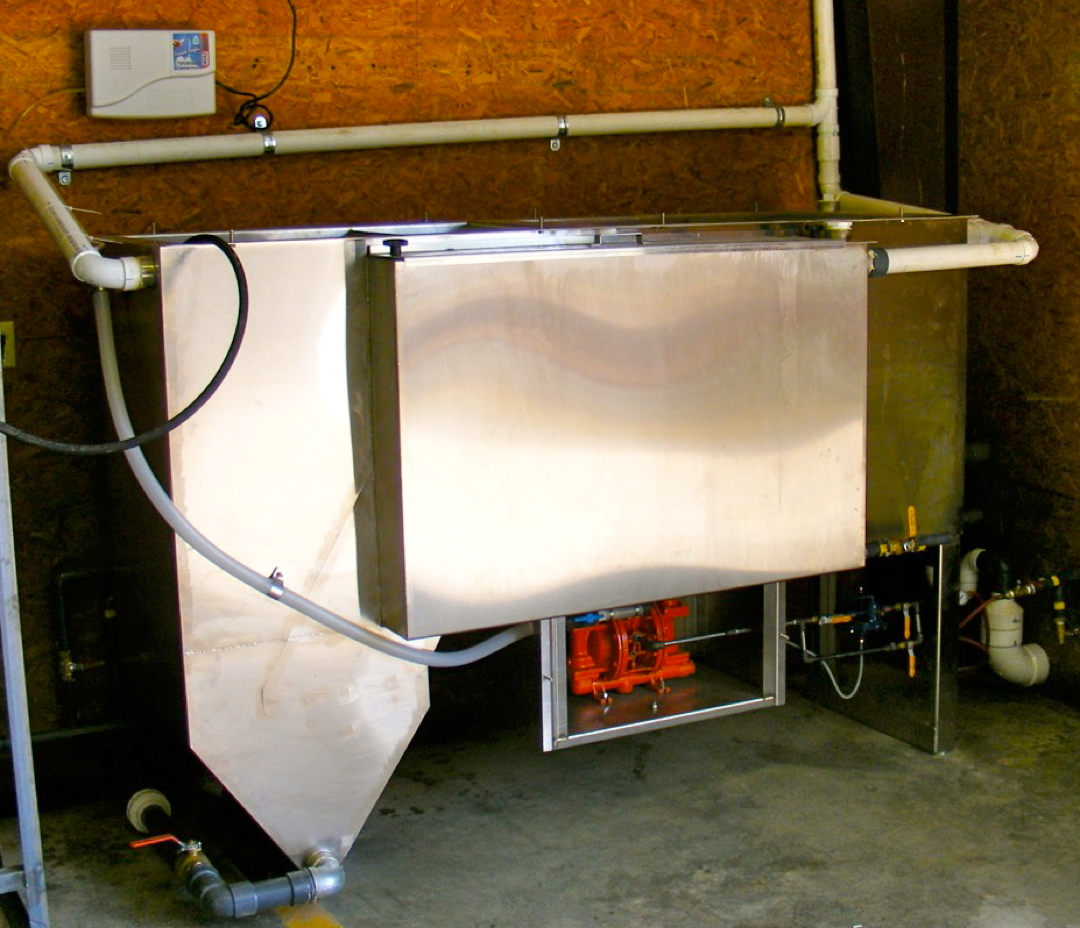
The Solids and Oil Water Separation Systems (SOWS) are horizontal gravity flow treatment systems designed to separate settleable solids, suspended solids, and free and dispersed oil.
New SOWS Systems Remove Both Free & Dispersed Oil AND Settable & Suspended Solids!
Introducing the new Best Available Technology (BAT) for the treatment of produced water and flow-back water. The Solids and Oil Water Separation Systems (SOWS) are horizontal gravity flow treatment systems designed to separate settleable solids, suspended solids, and free and dispersed oil.
This system is a significant improvement to the currently used CPI Separators which can only separate free oil and settleable solids – allowing a considerable amount of dispersed oil, suspended solids, and stable emulsions to pass through the system.
Applications:
Onshore and Offshore Drilling Operations
Oil Refineries
Produced Water
Waste Oil Processing Facilities
Benefits:
No moving parts
Low maintenance
Heavy duty carbon or stainless construction
The SOWS System has 5 stages of separation.
Solids Oil Water Separation
Stage 1, Inlet Area – The water mixture flows into the inlet quiescent area where the velocity of the water slows. The free oil (150 micron in size or greater) separates and rises to the surface where it is removed by a pipe skimmer.
Stage 2, Clarifier/Solids Intercept Section – The settleable solids flow downward and are captured in the clarifier/ solids intercept section.
Stage 3, Inclined Plate Section – The suspended solids and dispersed oil flow upward through the inclined plates section. Most of the suspended solids will slide down these plates into the hopper.
Stage 4, Separation Compartment – The remaining suspended solids and dispersed oil flow into the separation compartment where the coalescing plates remove 99% of the free oil droplets 30 micron or greater. This oil rises to the surface where an oil skimmer decants it to an oil storage tank. The coalescing plates then capture the remaining suspended solids.
Stage 5, Clean Water Compartment – The flow of water will go over the overflow weir into the clean water compartment where oil absorption polishing bags trap any trace oils before the water is discharged.
By removing 99.9% of the free oil and settable solids, our oil/water separators systems will extend the life of the cleaning baths and improve the quality of the process waters.
Many industrial processes use large amounts of water for a variety of reasons including cooling and cleaning. To assure continuous production, this water has to be clean and free of contaminants such as oil and particles.
The cost of chemicals and downtime to re-charge the spent baths can be expensive. By removing 99.9% of the free oil and settable solids, our oil/water separators systems will extend the life of the cleaning baths and improve the quality of the process waters.
Available in a range of dimensions and flow rates, these separators can be constructed of stainless steel or carbon steel that is coated for corrosion protection. All of our systems are constructed of heavy-duty components for maximum life and performance. They can be integrated into existing process lines and customized with hoppers or oil storage compartments and a variety of skimming, monitoring, and pumping packages.
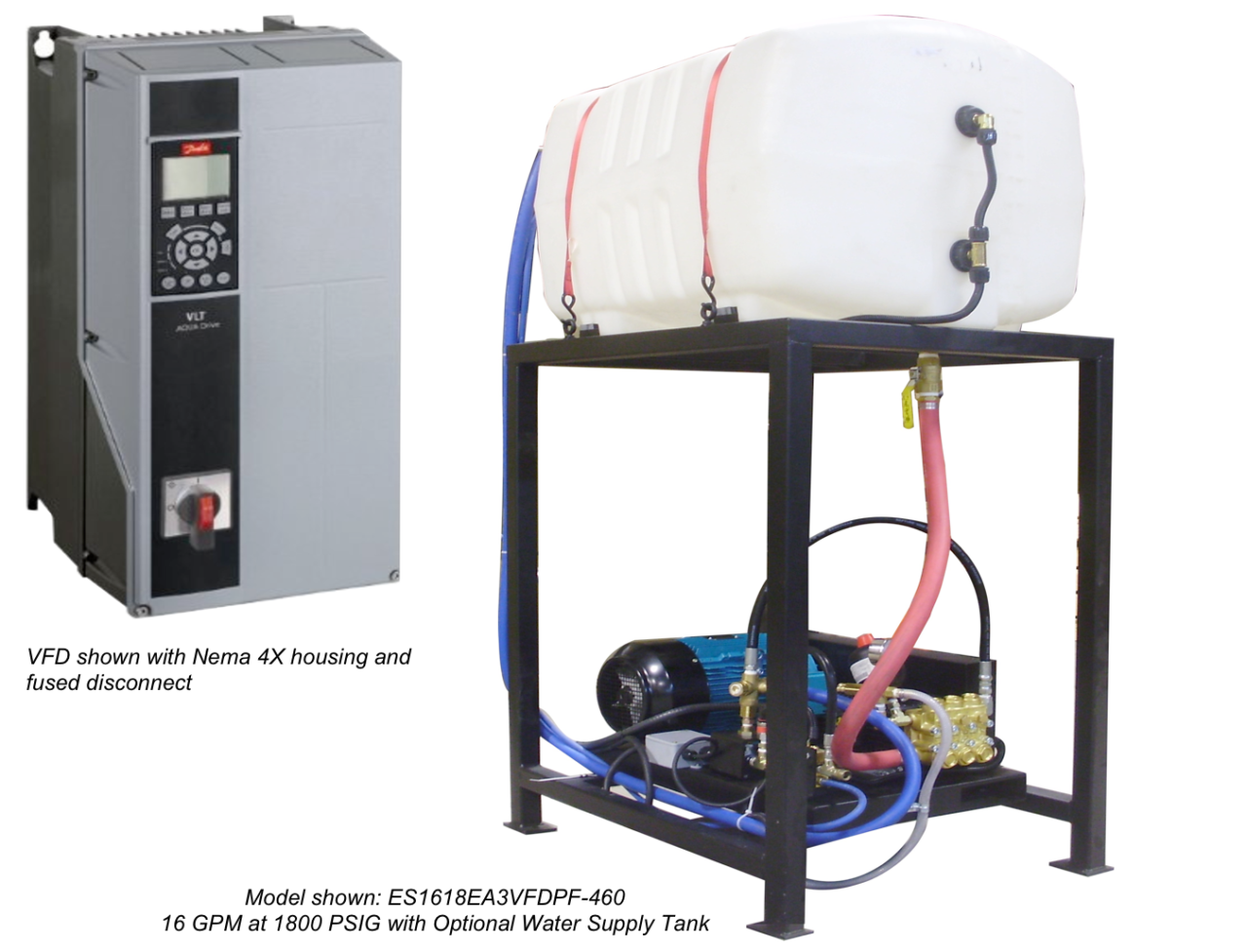
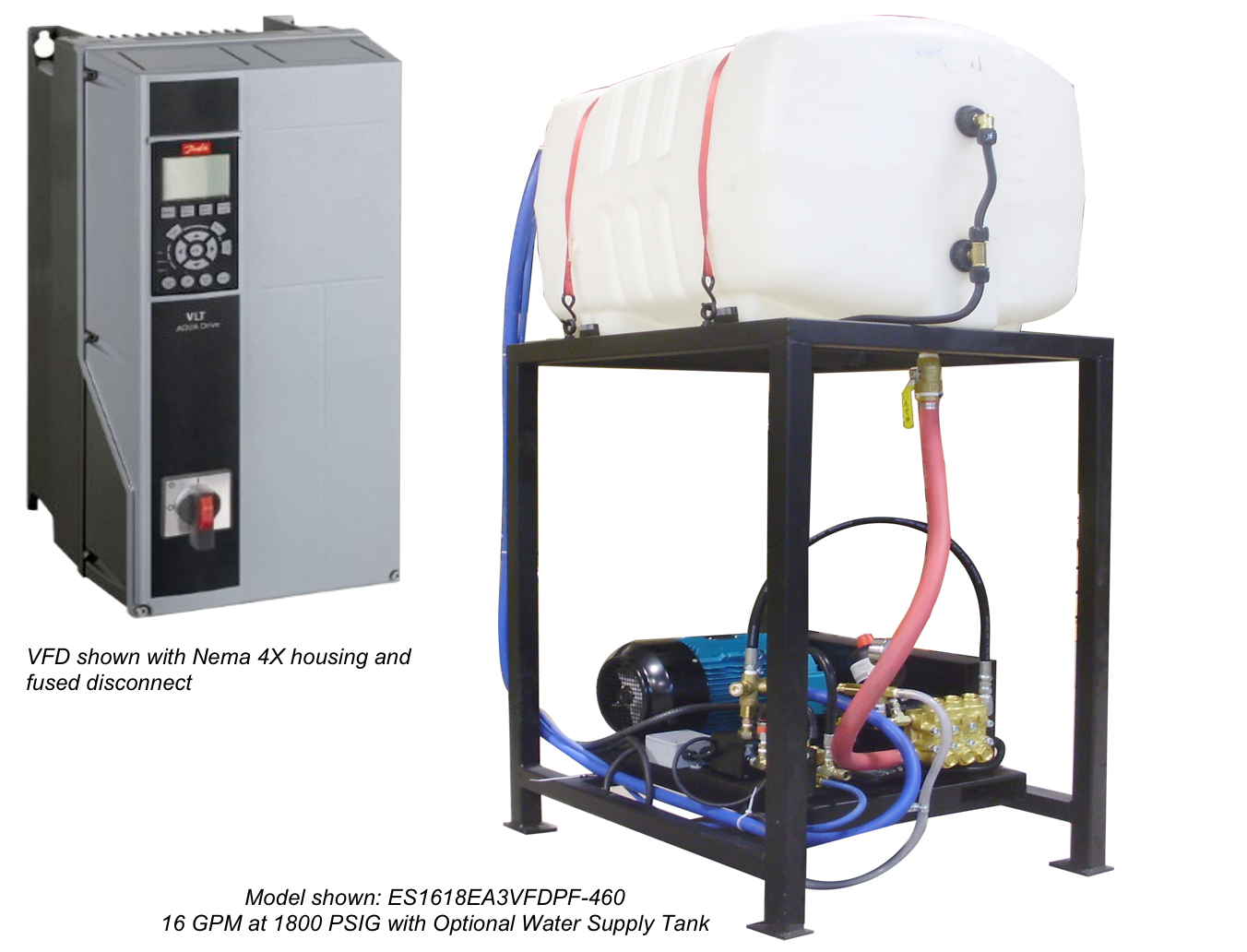
A Variable Frequency Drive (VFD) system is one of the most cost effective units to run and to maintain and they are extremely easy to use.
A Variable Frequency Drive (VFD) system is one of the most cost effective units to run and to maintain and they are extremely easy to use. The VFD display makes is simple to trouble shoot. The VFD display shows various input signals which can be used to visually display and indicate system faults. The VFD system offers substantial operational and maintenance savings. A variable frequency drive extends the life of the motor, pump, and pump components. A VFD significantly reduces maintenance or service related issues. The system will only utilize the power (speed of motor and pump) to match the output demands. For example: A 20 gpm system, set up for 4 users at 5 gpm each. If there is only one user on the system outputting 5 gpm, the motor/pump will only turn at 1/4” speed to meet that demand. The VFD system shows a savings in energy costs to run the system, it only uses what it needs. On system start-ups, a VFD controlled system slowly ramps up speed to the minimal required rpm to meet the initial demand. This eliminates the huge inductive amperage load a system with standard controls requires when starting. A VFD system does not require the use of motor contactors, overloads, and fusing.
VFD benefits
Energy savings
Smoother quieter operation, eliminate water hammer
Extend pump life
Extend system component life
Extend motor life
Reduce maintenance
Functional Design
Real-time system monitoring and control (wash station duty cycle/activity, low inlet water supply and system pressure loss shutdown, and high water temperature shutdown)
Compact and versatile design allows for installation in virtually any location/environment
Systems designed/built to application requirements – provides for increased productivity
VFD increases or decreases pump/motor speed to meet the demands of single and or multiple users
Standard Equipment
Belt-driven, industrial-duty plunger or piston pump with multi-gun pressure regulator, pilot-activated flow switch, factory-set pressure relief valve and liquid-filled pressure gauge
VFD controlled with performance display screen, Nema 4x housing, and a fused disconnect
Premium-efficiency, inverter-duty motor (IP55, Class B temp. rise, Class F insulation, 40° C ambient temp. design)
Our stormwater oil water separators will remove solids and all free and dispersed non-emulsified oil droplets 20 micron or greater in size and produce an effluent discharge of less than 5 PPM.
The first phase of a rainstorm can be deceiving. The peaceful melody of the droplets can quickly disperse over parking lots, fueling depots, and washing areas that all contain pollutants, such as oil and grease. Because impervious surfaces do not allow rain to infiltrate into the ground, storm water runoff is generated. Surface runoff or storm water runoff then becomes a major threat to our nation and our clean water supply.
In order to protect our clean water supply these waters have to be treated before being discharged from storm sewers to surface waters. Our WB-QB oil water separators will remove solids and all free and dispersed non-emulsified oil droplets 20 micron or greater in size and produce an effluent discharge of less than 5 PPM.
Most municipalities have storm water departments that are made to protect water resources and reduce impacts from storm water runoff. They also are responsible for the compliance of requirements for the National Pollutant Discharge Elimination System (NPDES) permits.
Our efficient, below ground separators meet pretreatment SPCC and NPDES permits for local communities.
Our proprietary design incorporates patented revolutionary non-plugging poly-propylene coalescing plates. Our coalescing media exceeds all known American performance standards including UL 2215, and has been tested in accordance with European Union Standard CEN EN858-1, which requires a discharge limit of less than 5 PPM. Our separator tanks are manufactured to UL 58 and UL 1746 Standards. Construction can be either single wall or double wall with a corrosion protection system. Sizes are available up to 4000 GPM flow rate.
Operation Maintenance
All models can be serviced from grade level
No confined spaces
Plates easily removed, washed down and put back in place
Solids can be pumped out through large access opening from grade level
Options Available
Grit chamber for solids removal prior to coalescing compartment
Effluent pump out chamber after coalescing compartment
Oil stop valve to retain lighter liquids from leaving separator