Featured

January 25, 2021
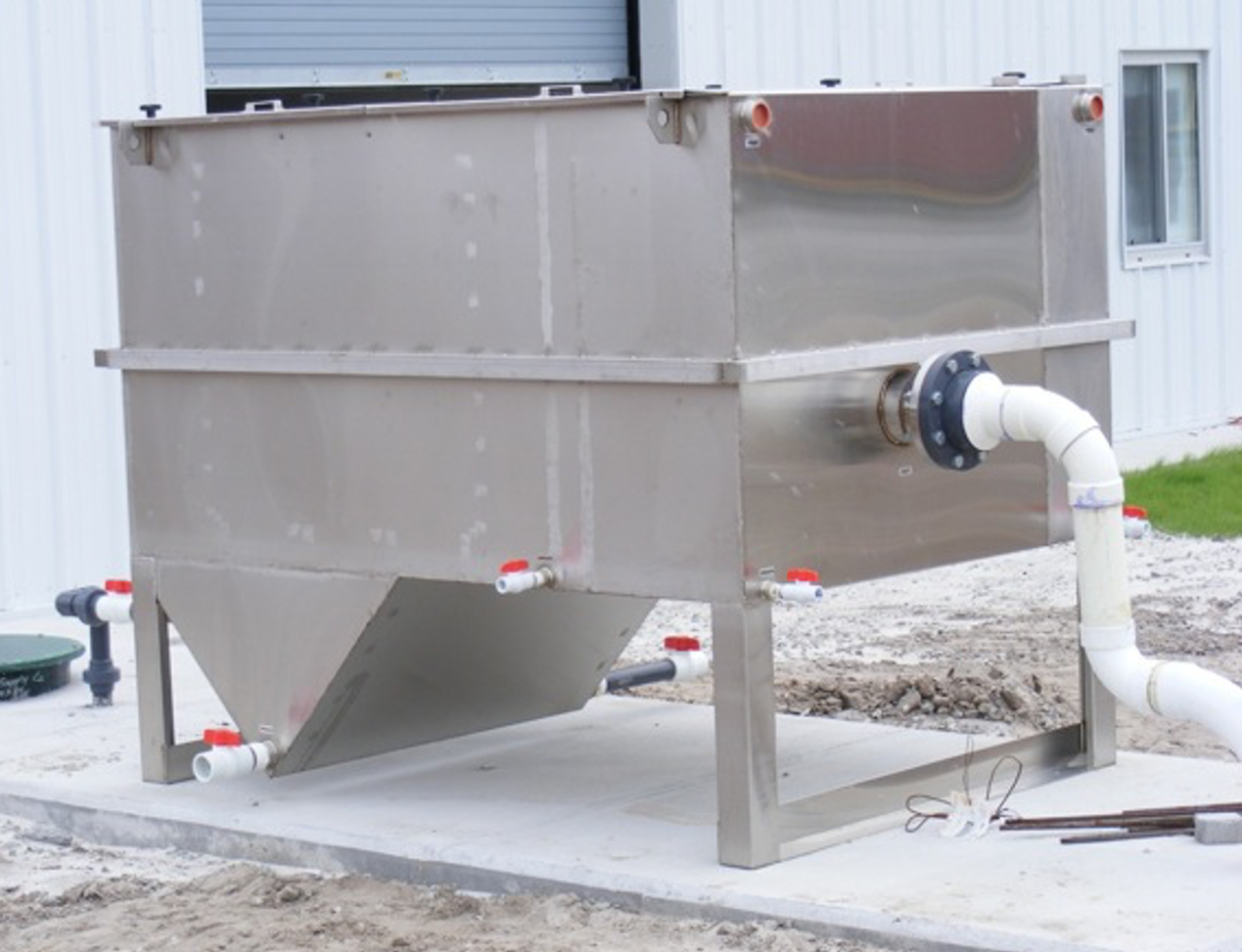
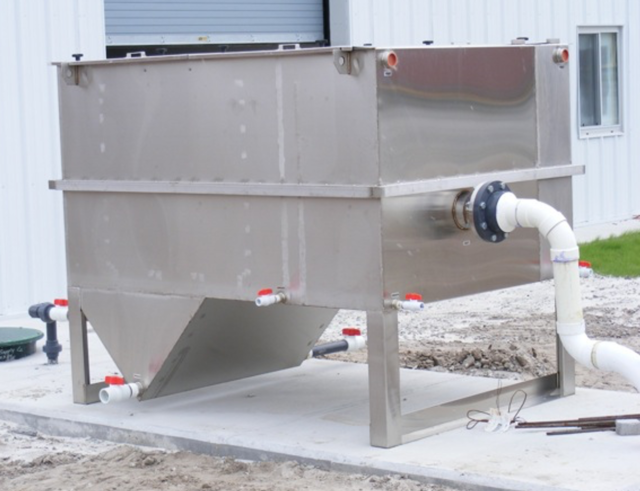
standard-oil-water-separator-1280x981.png

Even though the terms “Oil Interceptors” and “Oil Water Separators” are often used
interchangeably, they are very different systems.

Interceptors

Oil interceptors
Oil interceptors are designed for use in drain lines where oils, sediment and other liquids are intercepted.

Oil interceptors are typically used in low flow drain lines where small quantities of oils, sediment
and other liquid contaminants can be “intercepted”. These drain lines may come from variety of
facilities including covered parking garages, machine shops, service stations, and manufacturing
facilities.

Usually constructed of steel, fiberglass or plastic, interceptors are simple systems which include a
baffle plate, a solids bucket, and a separation area. As the water enters the interceptor, a baffle
plate reduces the flow and turbulence of the incoming water which helps to drop out some solids
and sludge.

A low flow rate and little turbulence permits the oils and other light density to slowly separate from
the water and rise to the top of the separation area. From there, relatively oil-free water is
discharged to the sewer.

Oil Water Separators

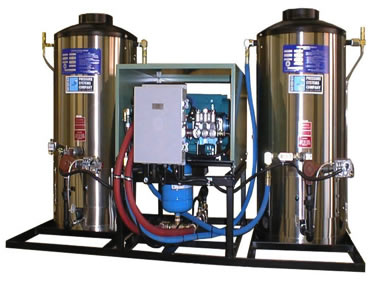
In comparison, Oil Water Separators have a far more sophisticated and efficient design. They are used in higher volume applications such as industrial wash operations, parking lots, re-fueling facilities and military installations where there is a potential for a much higher volume of water, oil, and contaminants.

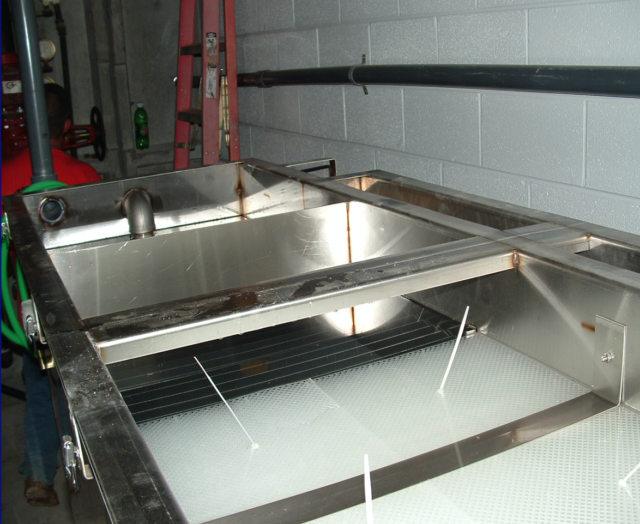
The standard oil water separator is a steel or stainless steel tank containing an inlet compartment, baffles system, sludge chamber, separation chamber with coalescing media, and clean water outlet chamber.

The water enters the inlet compartment where the oil separation process begins. Here, baffles slow down the water flow which causes some of the solids to drop out of suspension. Next, parallel corrugated coalescing media in the separation chamber cause the oil droplets in the water to coalesce together, and increase in size until they separate from the water. This coalescing media, with an internal structure of interconnecting channels, can remove essentially all free and dispersed, non-emulsified oils to an effluent concentration of less than 5 ppm – which is acceptable for discharge to most municipal sewer systems.


October 28, 2020
winter-washing.jpg

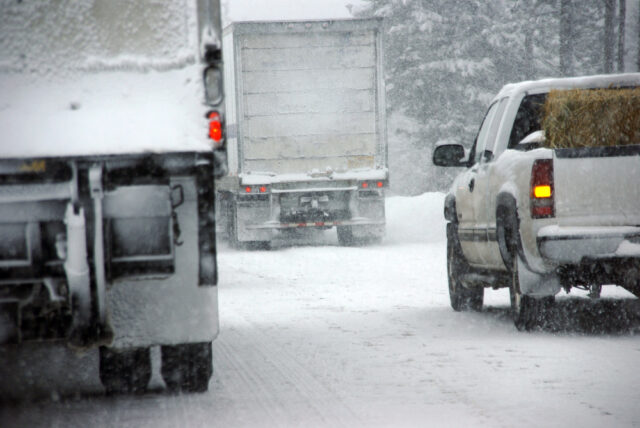
During the winter as winter storms approach, many municipalities will spread salt directly on the roads.  Additionally, many have started to proactively apply what are called anti-icing fluids to prevent water from forming frost on the pavement surface. Whether anti-ice or deicing fluids, they all share the same basic chemistry, which is some form of salt.  The formulations include sodium chloride, calcium chloride or magnesium chloride. Additionally, the anti-icing fluids often include organics such as beet juice or cheese whey.

This presents a unique issue for winter washing operations, especially when closed loop wash water treatment systems are employed.  Closed loop wash water treatment systems are used in a variety of instances including no access to public sewer systems, unreasonable permitting issues associated with sending water to the sewer, and uneconomic costs to tie into a sewer system due to the distances.

When cars and trucks are driving on roads coated with either deicing or anti-icing fluids, the vehicle’s body will often become covered with a thin coating of salts.  During typical washing operations, the salt is flushed off.  If the wash bay is connected directly to a sewer, that salty water is diluted and simply sent to the city without issues.  However, if the wash system is connected to a closed loop system where that water is used over and over, the salt levels will continue to rise in the wash waters. This leads to the salt being reapplied to the vehicle, which show up as salt streaks when it is dried. But more important than the streaks, the salt residue enhances the corrosion process on the metal.

There is no simple or inexpensive way to remove salts from wash waters. One option is to haul off or send a portion of the salt contaminated water to a city sewer.  Another option is to use a thermal evaporator to continually evaporate a small amount of the water in the closed loop system’s volume so that fresh water can be added.  Periodically, the concentrated water and salt mixture in the evaporator would also have to be hauled off.  The evaporation process will reduce the total volume of waters to be hauled off, and hence, reduce the hauling cost. The third option is to use a membrane filtration system.  However, this method is expensive and not at all well suited to process waters contaminated with dirt, dust, cleaning chemistries, and oils.

The salt in the waters also has implications for the components of wash water treatment systems. Although our oil water separator system is constructed of 304 stainless steel, salts in the water may attack the welds in the unit and accelerate the corrosion process.  Additionally, salts will attack pump shafts and cause the seals to leak.  If this happens, the only solution is to change the pump.

To combat the effects of corrosion, we offer various levels of corrosion protection to our clients. For our oil water separators, we offer an internal coating which forms a tough barrier that protects the stainless steel from the salt.  For our other treatment systems, we can upgrade the pumps from carbon steel to a salt resistant 316 stainless steel, which will prevent any pitting of the shafts and pump internals.  We can also add a conductivity meter to continually monitor the amount of salts and other chemicals in the water and trigger an alarm when the levels rise too high.  Once this water is pumped out or discharged, fresh water is automatically added to the system, diluting the salts to a manageable level.


August 17, 2020
Geobag3.jpg

Robustly designed for range of industrial applications from oilfield pipe washing to large equipment washing to large hand tools, our Solids Settling Systems with Geo Bags are designed to help control costs associated with solids removal from wash bay sumps.

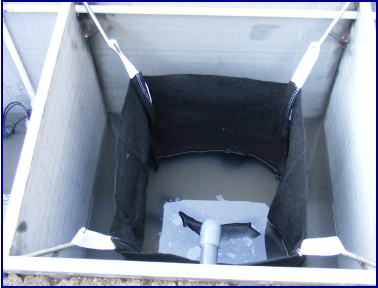
They can be constructed in a range of sizes, configurations and materials, depending on your application. Main components include a multi-compartment sump, an air driven solids handling pump, a control system, geo de-watering bags, and optional holders.

Benefits

  • Built to any size and configuration
  • Heavy-duty construction
  • Range of porosities available
  • Cost effective
  • Easy to install and move
  • Impervious to non-petroleum

System Components

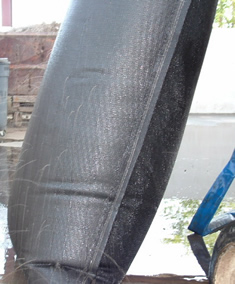
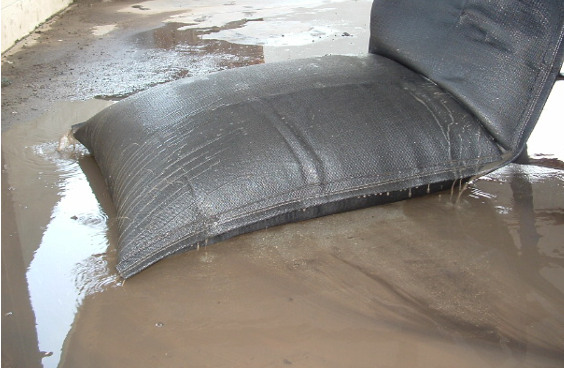
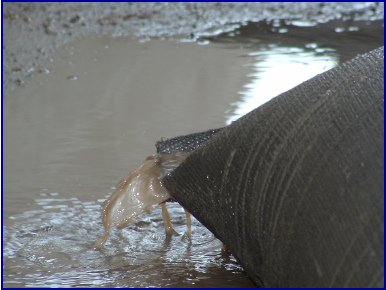
Geo Bags – Placed in the sump or securely fastened to the end of a discharge pipe or hose, the bag slows down the flow of the incoming water, allowing the suspended solids to remain in the bag. Over time, the bag releases the water. Once the sediment-laden bag is de-watered, it can be picked up by a front-end loader and easily disposed of according to local enforcement agency regulations.  The fabric is comprised of a heavy non-woven fabric and double chain stitched for extra security.  Non-woven geo-textiles are approved by many local, state and federal agencies, including the Federal Highway Administration, U.S. Army Corps of Engineers, the Environmental Protection Agency and AASHTO.


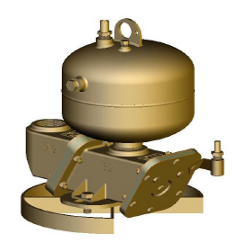
Pump & Control System – We use heavy-duty, solids handling, air driven pumps that can be fully or partially submerged. These pumps handle debris ranging from stringy to abrasive up to 2” diameter including slurries. The pump and control systems come with a variety of valves, seats, and control panel options that will be engineered to your particular application.

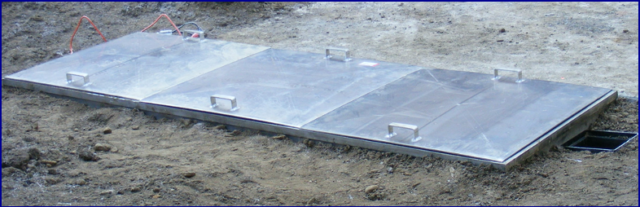
Sump System – The sump is an integral part of the solids handling and separation system. They can be built in stainless steel, aluminum or concrete, with multiple compartments, weirs or screens. Sump sizes are engineered for the washing application and water treatment system.  Depending on the application and location, they can be placed above ground or buried.


August 6, 2020
hand-sanitizer-with-foot-handle.png

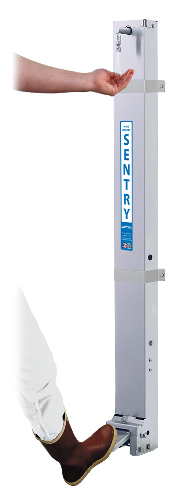
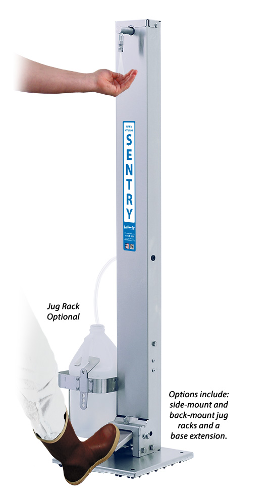
This commercial-grade Hand Sanitizer Dispenser is totally hands-free!  Constructed of stainless steel for maximum durability, it is perfect for dispensing both gel and liquid hand hygiene products. A foot pedal activates a stainless steel mechanical pump that sprays a field-adjustable amount of product into the users hand – eliminating contamination due to hand contact.

Ideal for food preparation areas, hospitals, military facilities, retail stores, offices and countless other locations, this dispenser can be free-standing or permanently mounted to the floor or wall. The floor-mounted unit has the option of having a lockable enclosure to discourage tampering or theft. Easily installed in minutes!


May 27, 2020
gas-fired-pressure-washing-system.jpg

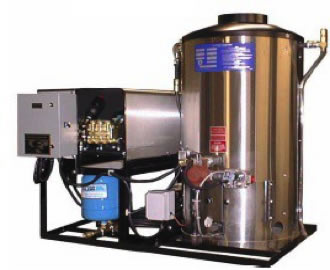
Gas Fired Pressure Washing System

Our natural gas or propane-fired pressure washers are exceptionally well-engineered systems. Designed and manufactured for heavy-duty commercial and industrial washing operations, they will operate for years in the harshest environments.

Each machine offers our unique “variable flow” feature, which allows the operator to vary the flow rate and corresponding pressure at the wand when needed—providing flexibility when cleaning various surfaces.

Unlike other gas-fired washers that require maintenance every couple months, our washers are known for their long-lived, low maintenance heating systems and robust construction.

Features

  • CSA approved for use with a Class B exhaust vent
  • Belt-driven with a multi-gun pressure regulating valve and an oil bath plunger pump with thermo-probe protection.
  • Trigger gun activated, flow switch controlled auto start/stop system with solid state time delay shutdown
  • Centralized systems for multiuser applications
  • Modulating gas thermostat control with steady temperature up to 200°F
  • 395,000 BTUH input rated heater with adjustable temperature controller and factory-set safety relief valve
  • Large capacity 3/4 in. schedule 80 heating coil with stainless steel wrap and 10 in. draft diverter
  • Dual or single lance/gun(s) with 50 ft. x 3/8 in. high
  • Low-pressure (downstream) or high-pressure (upstream) chemical injection
Pressure Washing Gas Fired System

Factory Added Options

  • SRA – Surge Relief Assembly (for installation on water supply line when backflow preventer or check valve present)
  • ARS – Automatic re-light system for pilot light
  • LWPP – Low inlet water pressure protection with illuminated reset button
  • ETM – Hour Meter
  • CLS – Cleaning station assembly with ½’ ball valve and hose quick connect
  • CS-1 – Chemical injection station with adjustable chemical injector wash/rinse control valve and swivel connection
  • 2G40 – Additional G40 heater with extended frame for a total BTUH input of 790,000.


Gas-fired Pressure Washing Systems

Flow Pressure Motor Full Load Current (Amps) Size-Inches
MODEL GPM PSI H.P. 230V/1PH 208V/3PH 460V/3PH 575V W”xL”xH”
WB4011-G 4 1100 3 17 9.8 4.4 3.5 45/38/52
WB4019-G 4 1900 5 22 14.6 6.6 5.3 45/38/52
WB4029-G 4 2900 7.5 33 22.5 10.2 8.2 45/38/52
WB5430-G 5.4 3000 10 29 13.1 10.5 45/38/52
WB5620-G 5.6 2000 7.5 33 22.5 10.2 8.2 45/38/52
WB6012-G 6 1200 5 22 14.6 6.6 5.3 45/38/52
WB6020-G 6 2000 7.5 33 22.5 10.2 8.2 45/38/52
WB8012-G* 8 1200 7.5 33 22.5 10.2 8.2 45/38/52
WB8019-G* 8 1900 10 29 13.1 10.5 45/38/52
WB8029-G* 8 2900 15 40 18.1 14.5 45/38/52
WB1030-G* 10 3000 20 55.2 24 20 45/38/52

*Comes with two hoses and wands.


May 27, 2020
cold-water-pressure-treatment-systems.png


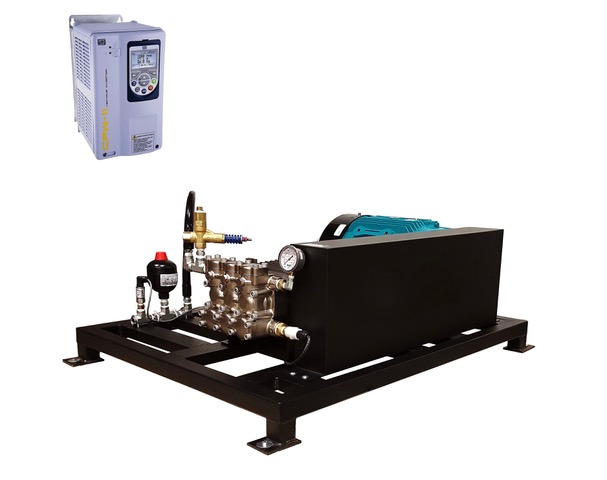
We specialize in high pressure pumping and washing systems for use in commercial and industrial cleaning applications. Our commitment to design excellence and quality workmanship, supported by qualified and responsive personnel, ensures superior performance in your high pressure cleaning or pumping application.

Features:

  • CSA approved
  • Fully automatic
  • Unique, reliable design
  • Belt driven ceramic plunger pump on most units
  • Auto start / stop circuit controlled by trigger gun activation
  • Automatic high temperature shut down (thermo probe) for optimum pump protection
  • Ideal for centralized systems with multi-station outlets
  • 50 ft. steel braid pressure hose, trigger gun, variable pressure wand and stainless steel nozzle
  • Powder coat painted base and pump cover

Cold Water Stationary Pressure Washing Systems


Model Flow GPM Pressure PSI Motor H.P. Size L”/W”/H”
WB210CS 2.1 1000 1.5 24/12/14
WB315CS 3 1500 3 24/12/14
WB411CS 4 1100 3 30/20/16
WB419CS 4 1900 5 30/20/16
WB429CS 4 2900 7.5 30/20/16
WB440CS 4 4000 10 30/20/16
WB530CS 5.4 3000 10 30/20/16
WB520CS 5.6 2000 7.5 30/20/16
WB612CS 6 1200 5 30/20/16
WB620CS 6 2000 7.5 30/20/16
WB812CS** 8 1200 7.5 30/20/16
WB820CS** 8 2000 10 30/20/16
WB830CS** 8 3000 15 38/28/19

**8 GPM or larger models have 2 sets of hoses and wands 

Options Available

  • SRA Surge Relief Assembly (must be installed on the domestic water supply when the supply line has a back flow preventer, pressure reducing or check valve present).
  • SA Nitrogen Charged Pump Pulsation Surge Arrestor.
  • USC Upstream Chemical Injection
  • WB Wall Mounting Bracket
  • LWPP Low Inlet Water Pressure Protection
  • ETM Analog Hour Meter


May 8, 2020
air-pump-fed-foamers.png

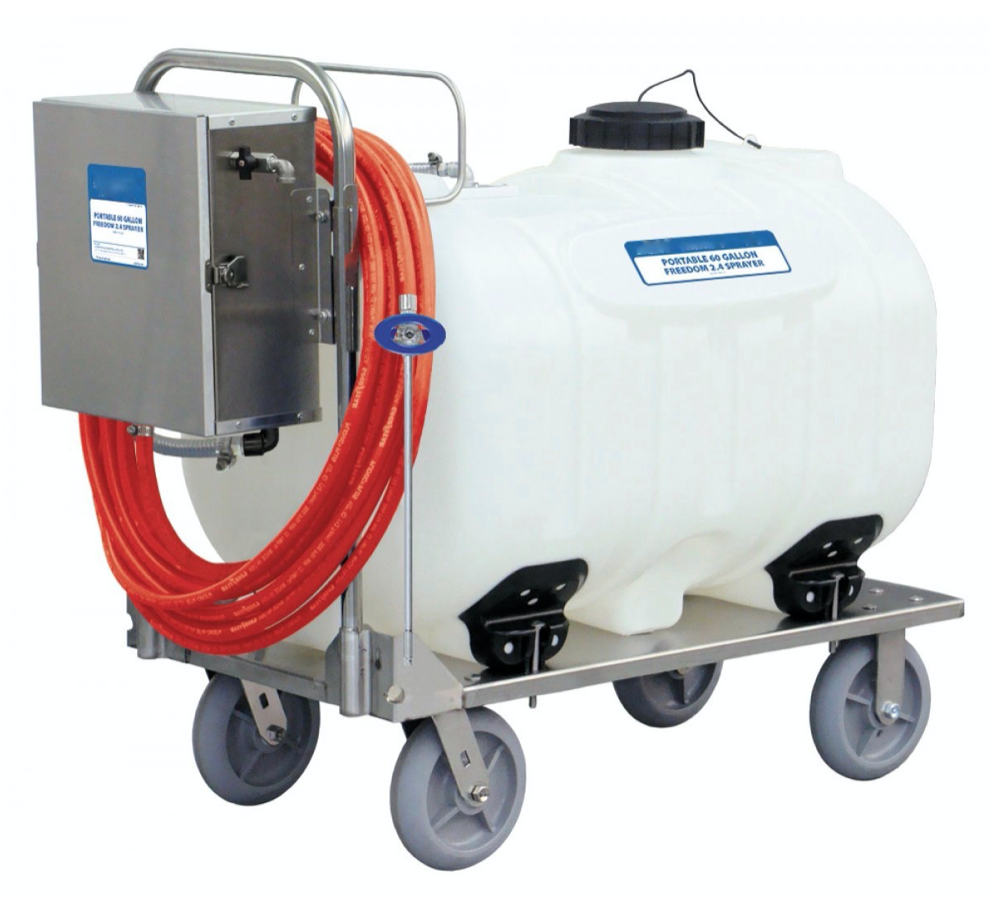
Foamers are chemical applicators that use compressed air to create thick foam that can be projected onto any surface. Foamers greatly improve the effectiveness of cleaners and disinfectants since they increase the surface dwell time and assure complete coverage.  Using foam also reduces the over-application of chemical since you can see exactly where the chemical has been applied.

Foamer Applications

  • Large Area Foam Cleaning
  • Food & Beverage Processing
  • Industrial
  • Metal Processing
  • Military
  • Farming
  • Paper Mills
  • Odor Control

Foamers are available in a variety of configurations to suit large or small jobs. They can be used as a pre-wash, a post-wash disinfectant, or general wash in facilities where plumbed water is unavailable. In facilities without compressed air, foamers can use boosted water pressure, a venturi injection system and atmospheric air to create foam.

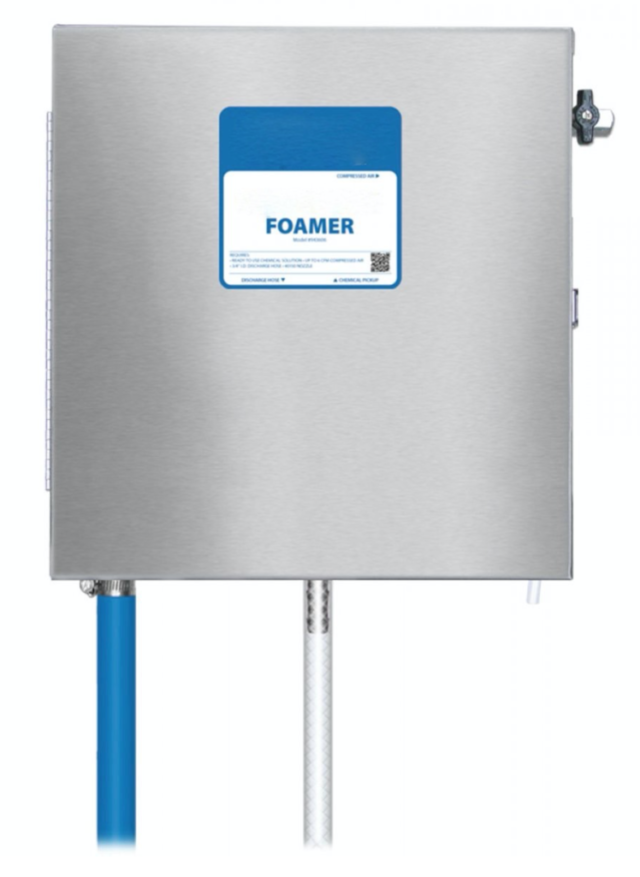
A range of foam volumes and throw distances are available.  We can recommend the best model to use based on your application and desired coverage speed.  Wall mount models include heavy-duty stainless steel mounting enclosures and portable models feature heavy-duty stainless steel carts.

Air Pump-Fed Foamers

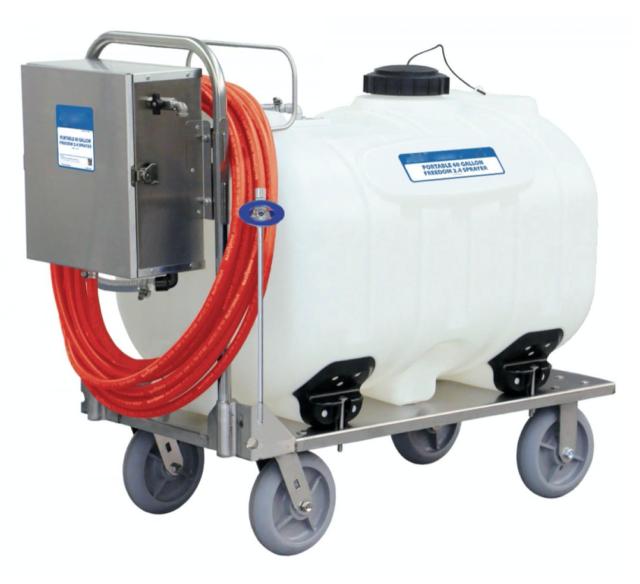
These units are powered by compressed air and are designed for use in facilities where plumbed water pressure is unavailable, unreliable or lower than the 35 PSI required. An air-operated diaphragm pump, mounted inside a stainless steel enclosure, draws and pressurizes a ready-to-use chemical solution to produce foam and project it through the hose, wand and nozzle to any surface up to 15 feet. The portable model draws pre-diluted chemical from an integrated tank on a cart and the mounted model draws from a customer-supplied stationary tank.

Portable Features

  • Rugged 1/2″ air-operated, double-diaphragm pump
  • Lockable stainless steel pump enclosure
  • Air inlet ball valve and regulator/filter
  • Machined poly foamer body
  • Integrated 20, 40 or 60 gallon poly chemical concentrate tank with strainer
  • All stainless steel 4-wheel cart with integrated hose rack
  • Non-marking tires w/SS swivel casters – (2) rigid and (2) swivel
  • Single or dual hoses with Open Flow Wands
  • Adjustable foam consistency (wet/dry)

Wall-Mounted Features

  • Rugged 1/2″ air-operated, double-diaphragm pump
  • Lockable stainless steel pump enclosure
  • Air inlet ball valve and regulator/filter
  • Machined poly foamer body
  • 50′ discharge hose & stainless steel ball valve
  • Stainless steel foam wand & fan nozzle
  • Provides 8 minutes of foaming time per 20 gallons of solution
  • Covers up to 500 sq ft (46.5 sq m) in 1 minute
  • Adjustable foam consistency (wet/dry)

Boosted & High Water Pressure Venturi Foamers

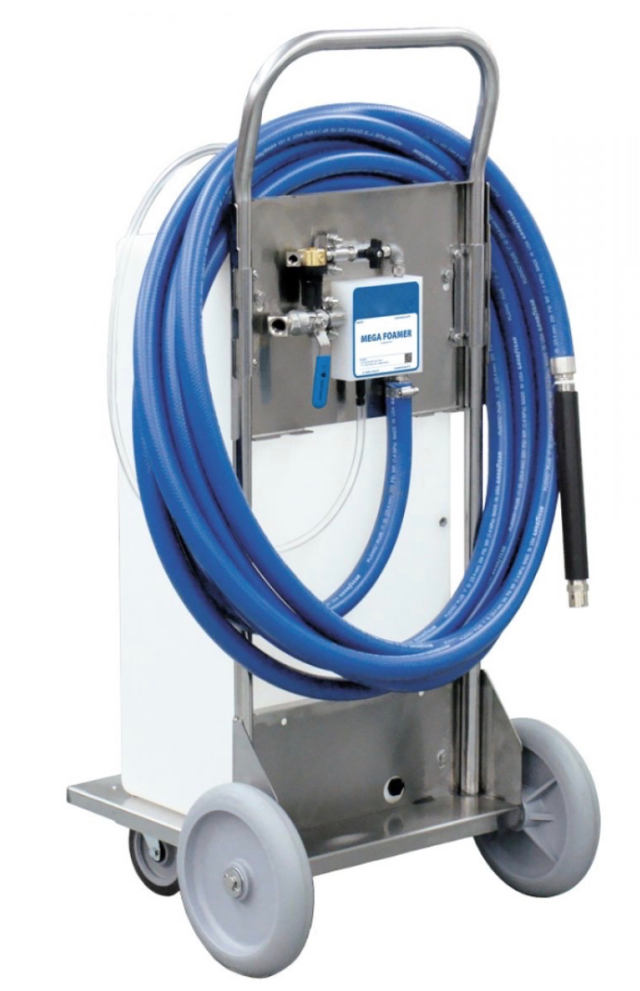
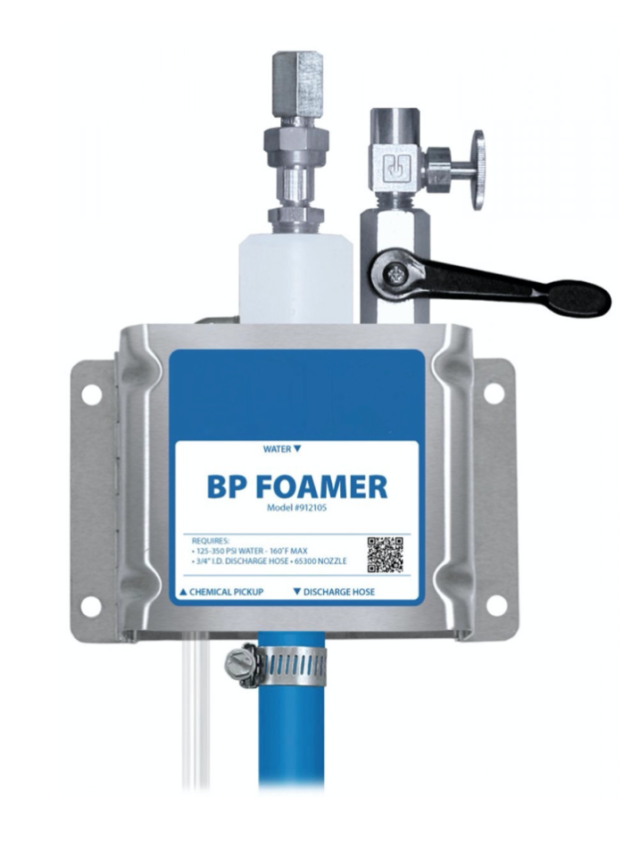
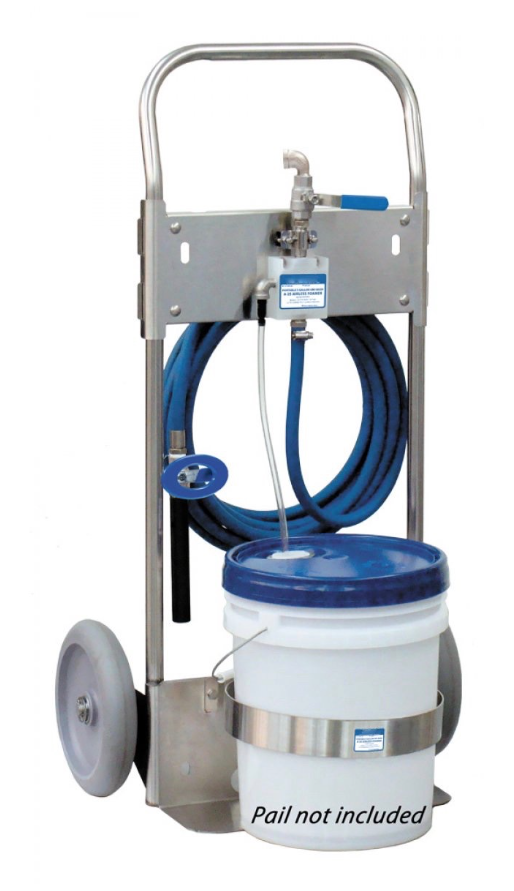
These water-driven venturi injection systems use boosted water pressure (125-350 psi), high water pressure (400-1000 psi) or a pressure washer to draw and blend chemical concentrate from a tank into the water stream to create an accurately diluted solution. Air is injected into the solution to create the foam which is then projected through the nozzle onto surfaces at distances from 15 to 45 feet. The portable model draws pre-diluted chemical from an integrated tank on a cart and the mounted model draws from a customer-supplied stationary tank.

Portable Features

  • Stainless steel 4-wheel cart with non-marking tires
  • Two stainless steel swivel casters
  • 20 or 60 gallon, wide-mouth, polyethylene chemical tank with drain
  • Stainless steel water inlet ball valve
  • Machined poly or stainless steel foamer body
  • 20 color-coded precision metering tips to set dilution ratios
  • 50’ discharge hose
  • Poly or stainless steel foam wand
  • Fan pattern nozzle for broad coverage
  •   Zero degree nozzle for high or distant coverage
  • Adjustable foam consistency (wet/dry
  • Available with other options

Wall-Mounted Features

  • Stainless steel mounting bracket
  • Machined poly or stainless steel foamer body
  • 20 color-coded precision metering tips to set dilution ratios
  • 50’ discharge hose
  • Poly or stainless steel foam wand
  • Fan pattern nozzle for broad coverage
  • Zero degree nozzle for high or distant coverage
  • Adjustable foam consistency (wet/dry)
  • Available with ability to apply 2 chemicals at the same time

High Pressure Airless Foamers

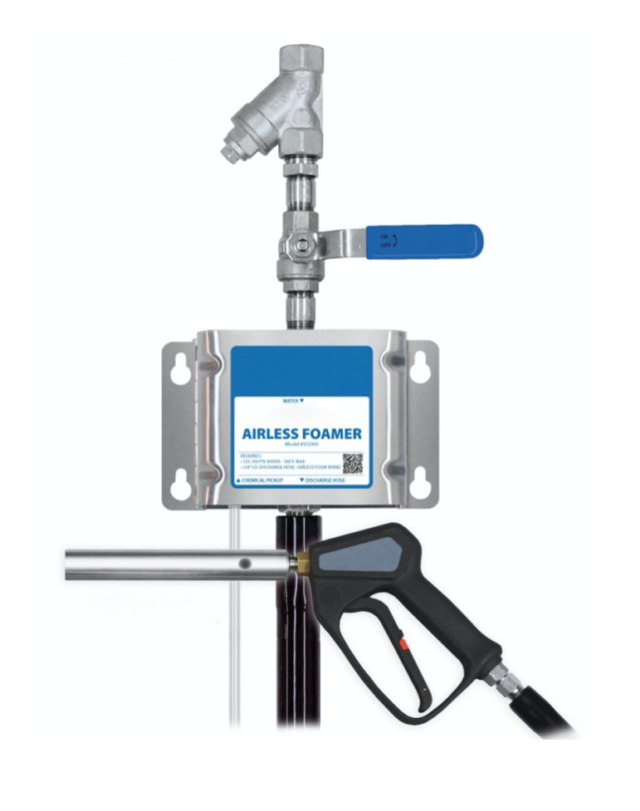
Our Airless Foamers are medium to high volume foam applicators for projecting foaming chemicals without compressed air. Just attach it to a wall and connect it to a water source. These systems use venturi injection and boosted water pressure to draw and blend chemical concentrate into the water stream to create an accurately diluted solution. The solution then flows through the discharge hose and trigger gun to the “airless” foam wand that draws in atmospheric air to create foam.  The foam can be projected on to any surface at distances up to 12 feet (depending on water pressure and nozzle).

Portable Features

  • Uses boosted water pressure – HP (400-1000 psi)
  • No compressed air required
  • Designed for foam cleaning medium to large sized areas
  • Stainless steel cart with stainless steel bucket strap, integrated hose rack and non-marking tires
  • Stainless steel inlet ball valve
  • Machined stainless steel or poly injector body
  • 20 color-coded precision metering tips to set dilution ratios
  • Discharge hose and trigger gun
  • Stainless steel airless foam wand

Wall-Mounted Features

  • Uses boosted water pressure – HP (400-1000 psi)
  • No compressed air required
  • Designed for foam cleaning medium to large sized areas
  • Stainless steel inlet ball valve
  • Machined stainless steel or poly injector body
  • 20 color-coded precision metering tips to set dilution ratios
  • Discharge hose and trigger gun
  • Stainless steel airless foam wand

May 8, 2020
foaming-sanitizing-rinse-systems.png

We can help you design multi-function systems consisting of proportioning, sanitizing, foaming and/or rinsing systems.

Proportioning & Foaming Systems

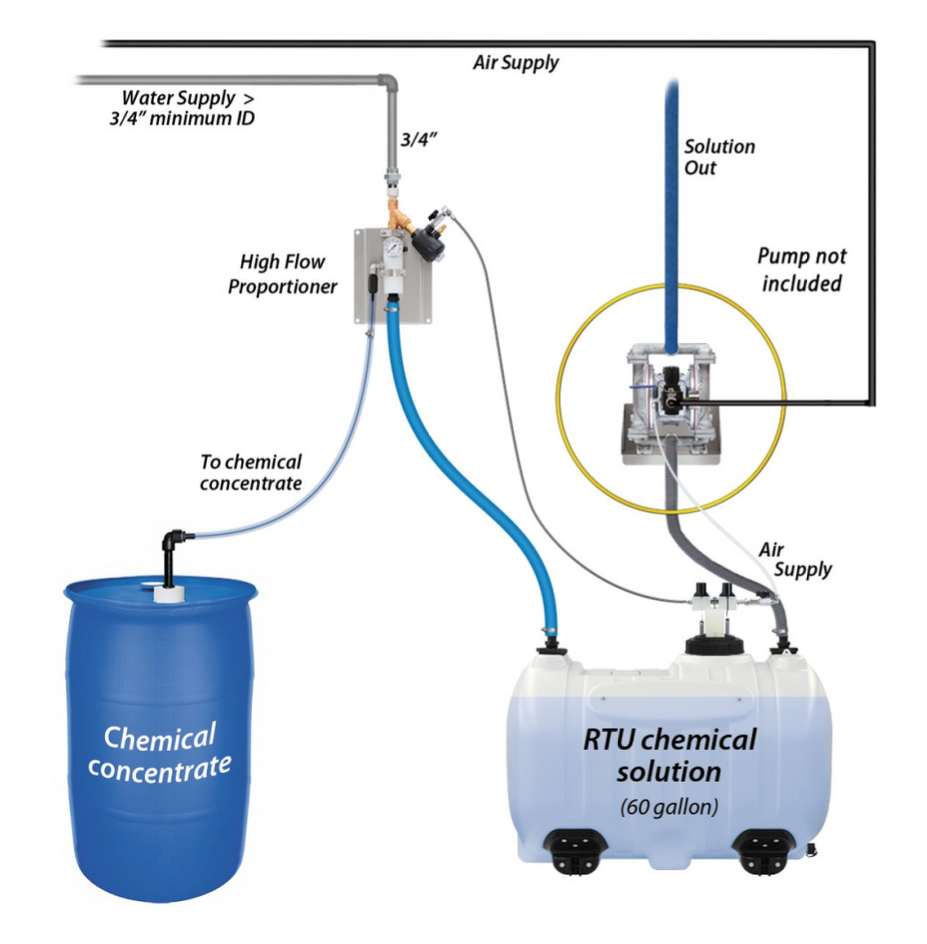
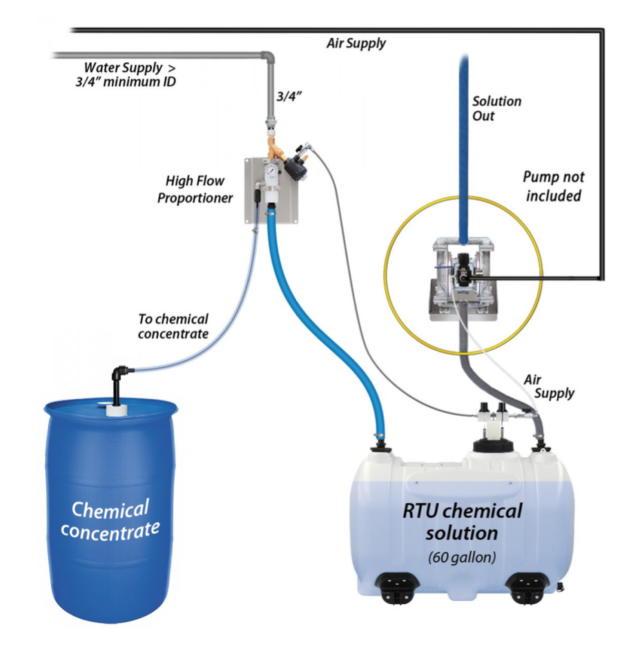
Our water driven chemical proportioning system will automatically refill a tank with ready-to-use chemical solution. When the solution in the tank drops below a pre-set level, the float valve triggers an air-activated solenoid to start the water flow. Using city water pressure, a venturi injection system draws and blends chemical concentrate into the water stream to create an accurately diluted solution. The system cycles continuously. Dual magnetic float valve design includes a primary valve to regulate normal operation and a secondary fail-safe valve to shut off the system if the primary float valve malfunctions.

Upon demand, an air driven pump system will transfer ready-to-use chemical solution to the foamer. The foamer creates foam by injecting compressed air into the solution to greatly increase volume and coverage ability. The foam is then projected through the discharge hose and nozzle on to any surface at distances up to 12 feet.

Proportioning & Foamer System

  • Heavy-duty chemical tank with drain
  • Magnetic float valves (primary and fail-safe) with polypropylene floats
  • Air inlet ball valve
  • Air-activated water solenoid
  • Machined injector body
  • Color-coded precision metering tips
  • Polypropylene 1/2″ air-operated double diaphragm pump
  • Compressed air ball valve & regulator/filter with gauge
  • Chemical solution suction tube with strainer
  • Discharge hose with MPT fitting
  • Machined foamers
  • Stainless steel inlet and discharge ball valves
  • 50′ hoses, polypropylene foam wand & fan nozzle
  • Stainless steel hose hangars

Sanitizing & Rinsing System

We can design combination systems for applying one chemical as foam, another chemical as a sanitizing spray and for rinsing. Using standard city water pressure, a venturi injection system draws and blends chemical concentrates into the water streams to create accurately diluted solutions using precision metering tips to control chemical usage. Compressed air is injected into the foaming solution which is then projected through the foam hose and fan nozzle. The sanitizer solution can be projected as a “flooding” spray for fast complete coverage. Finally, the system rinses at full pressure using stainless steel nozzles.

Features

  • Designed for precision foam application, and to rinse and sanitize medium to large surfaces and objects
  • Adjustable foam consistency (wet/dry)
  • Stainless steel mounting bracket
  • Stainless steel inlet and discharge ball valves
  • Machined foamer and sanitizer bodies
  • Color-coded precision metering tips to set dilution ratios
  • Combo foam / sanitize hose, polypropylene foam wand and fan nozzle
  • Rinse hose and stainless steel nozzle

April 23, 2020
portable-fogger-cart.png

Sanitizing Foggers

Foggers were typically used for sanitation in food and beverage facilities. Today, however, foggers and atomizers are now being used to easily apply disinfectants and sanitizers to hospitals, schools, hotels, airplanes, cruise ships, warehouses and public transit facilities.

Using compressed air, foggers atomize ready-to-use chemical disinfecting solutions and project the fog/mist particles into the air or onto exposed surfaces.

Foggers produce dry to wet fog, and come in range of models and sizes from small hand-held models to portable systems to permanent-mount, inline systems that can project particles up to 25 feet in 8 directions!  Let our engineers help you design the optimal fogging system for your facility.

Self-Contained Portable Fogger Cart

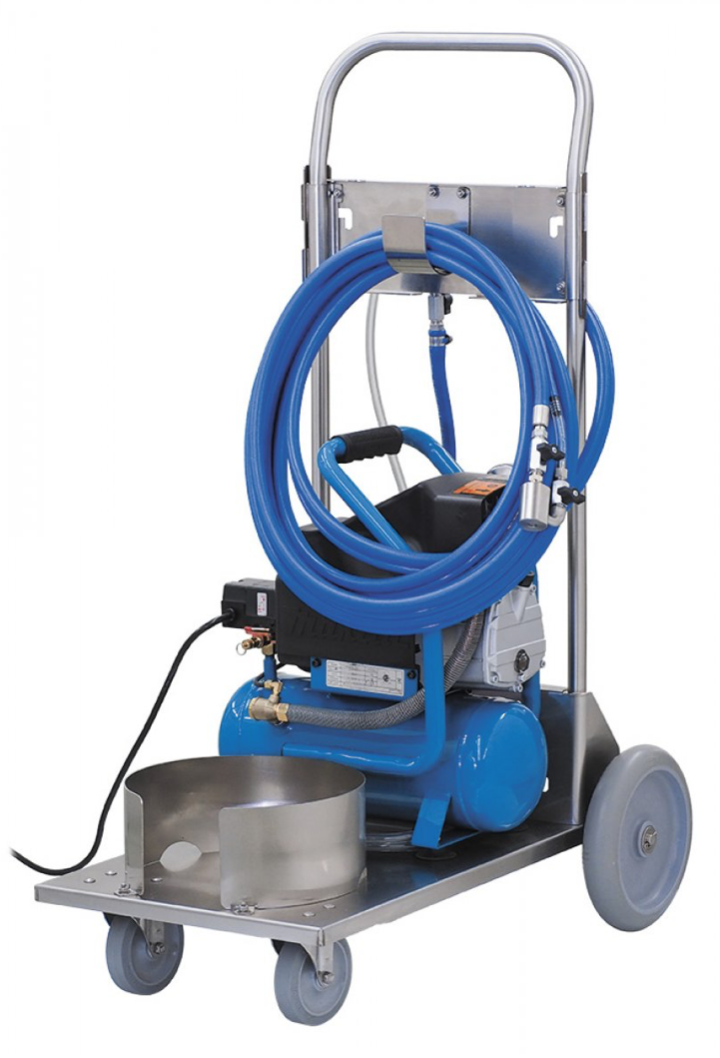
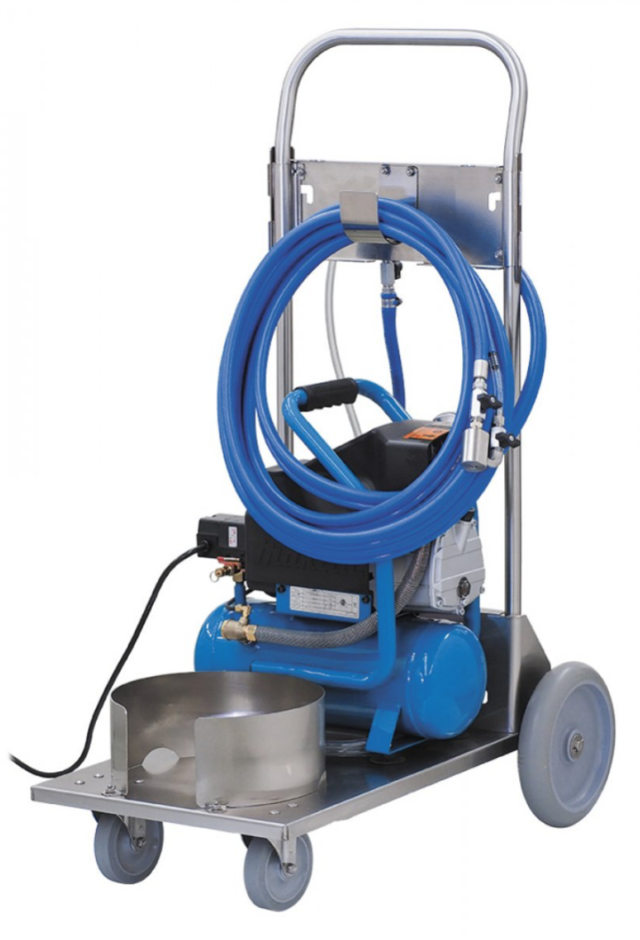
Our Portable Fogger Cart is one of our most versatile models – perfect for schools, hospitals, doctor’s offices and hotels. Powered only by a standard 120V electrical connection, this portable, self-contained system comes complete with a quiet on-board compressor, fogger body, hose and thumb-gun on a stainless steel cart. With the thumb-gun, it allows you to deliver chemical fog precisely where you need it.

The system uses compressed air to draw pre-diluted chemical solution from a pail on the cart to the fogger body which atomizes the chemical and projects it as small to medium size “damp” particles at distances up to 15 feet. Fog (mist) fills the air and saturates exposed surfaces, including hard-to-reach areas. Just plug it in and go!

Features

  • Stainless steel fogger body
  • 120V air compressor
  • 25′ twin-line air/chemical hose with activation ball valves
  • 10 color-coded precision metering tips can refine the particle size by reducing chemical usage
  • Stainless steel, 4 wheel cart assembly with hose rack
  • Non-marking tires with stainless steel swivel casters
  • Stainless steel metering tip holder
  • Stainless steel construction ensures durability and years of outstanding performance

Portable 2-4 Way Fogger
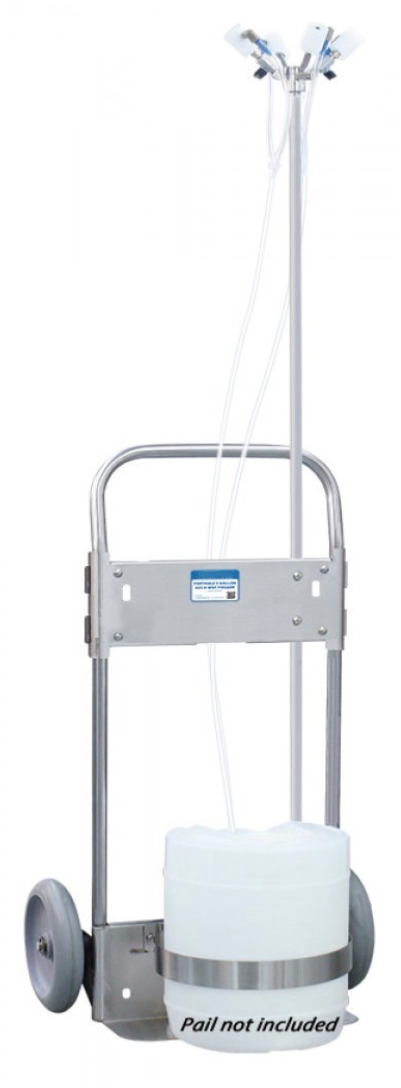
The Portable 5 Gallon 2-4 Way Fogger is a chemical atomizer that uses compressed air and
venturi action to draw ready-to-use chemical solution from a 5 gallon pail on the cart through a
telescoping mast to the fogger body which atomizes the chemical and projects it as small to
medium size “damp” particles at distances up to 15 feet. Fog (mist) fills the air and saturates
exposed surfaces, including hard-to-reach areas.

Ball valves on two fogger bodies allow for conversion to 2-Way
fogging for narrow areas and the telescoping mast allows for
variable height adjustment up to 80 inches.
You can refine the particle size for your particular application
and manage chemical use by choosing different optional precise
metering tips.

Features

  • (4) Four polypropylene fogger bodies mounted on adjustable mast
  • (2) Two air ball valves to control air flow
  • (2) Two 10′ chemical suction tubes and strainers
  • (4) Four metering tip holders
  • Stainless steel 2-wheel cart with non-marking tires
  • Round stainless steel 5 gallon pail rack (square rack optional)
  • Stainless steel, adjustable height fogger mast

Compact Hand-Held Fogger
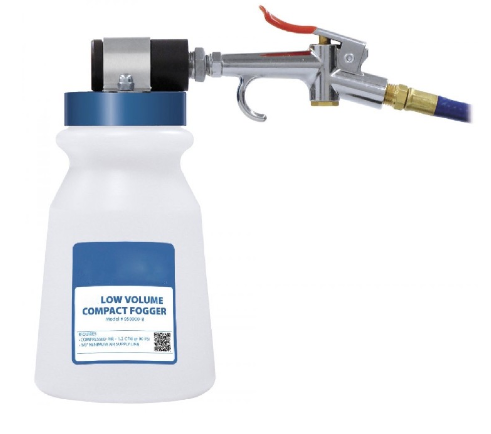
The Compact Hand-Held Fogger is a chemical atomizer that uses compressed air and venturi
action to draw pre-diluted chemical solution from the attached bottle, atomize the chemical, and
project it as small to medium size “damp” particles at distances up to 15 feet.
It is easy to use! Just fill the bottle with your pre-mixed chemical/disinfectant, connect compressed
air, and press the thumb gun activator. Fog/mist will fill the air and saturate any exposed surfaces,
including hard-to-reach areas. You can refine the particle size and manage chemical use by
choosing the correct precise metering tip for your particular application.

Features

  • Polypropylene fogger body attached to bottle top
  • Lightweight wide-mouth, polyethylene quart bottle
  • Thumb trigger gun with easy air hose connection
  • 10 color-coded precision metering tips
  • Metering tip holder

Pump Fed Foggers

Our Pump Fed Fogger is a chemical atomizer receives ready-to-use chemical from a central
chemical feed system and uses compressed air to atomize the solution and project it as small to
medium size “damp” particles up to 15 feet in 4 directions. Fog (mist) fills the air and saturates exposed surfaces, including hard-to-reach areas. It is also available as a 2 or 8 way fogger.

Air and chemical solution flow can be activated manually or activated in multiple zones throughout your facility using PLC controllers. A needle valve can refine the particle size for your particular application and
manage chemical use and a check valve prevents excessive dripping after shutdown.

Includes

  • Machined polypropylene ceiling manifold
  • Machined polypropylene fogger body
  • Chemical needle valve
  • Chemical check valve

North Carolina

Headquarters

At WashBaySolutions.com, we have been specializing in high tech, custom-engineered solutions to complex washing and wastewater issues since 1991.
+ 1 800-453-8639

WashbaySolutions.com

sales@washbaysolutions.com

GET IN TOUCH

Follow Our Activity

Get the latest news, product updates and case studies all happening here: